
How Arrest Warrants Work in Jennings County
In Jennings County, an arrest warrant is a judge's written command to take a named person into custody. Under Indiana Code chapter 35-33-2, the judge reviews sworn facts and asks whether probable cause supports the alleged offense. The paperwork has to be specific. It must name the person with reasonable certainty. It must state the offense and name the county. The order also carries the issuing judge's signature and directs law enforcement to arrest the subject and bring that person before a court. Which court signs a Jennings County arrest warrant follows the case assignment. Jennings Circuit Court draws the county's felony and murder cases. Jennings Superior Court takes misdemeanors, infractions, and ordinance matters. It also handles certain assigned Level 6 cases. Current local rules let the two judges authorize each other to exercise general jurisdiction, including signing warrants. No single judge or office in Jennings County issues every warrant.
Jennings Arrest Warrants Can Stay Hidden
An empty search result clears nothing. Indiana Court Records Rule 5 temporarily excludes an entire criminal case filed with an arrest-warrant request while the judge considers it. Access may open if probable cause is found. But the judge can keep the case closed when release would create a listed risk. The exclusion ends once the arrest happens. Even then, another rule, statute, sealing order, or protected case type can still keep a Jennings County file out of view.
Key point: MyCase is a case-information tool, not a complete Jennings County arrest warrant roster or live service-status system.
The temporary closure protects the work of the court and police before service. It also explains why an empty web search proves nothing. Juvenile records, investigative requests, and sealed files have separate limits. Protected identifiers do too. Ask the clerk which public part of a known Jennings County file can be inspected. Then ask the sheriff. The official Rule 5 source states the controlling access rule for court records.
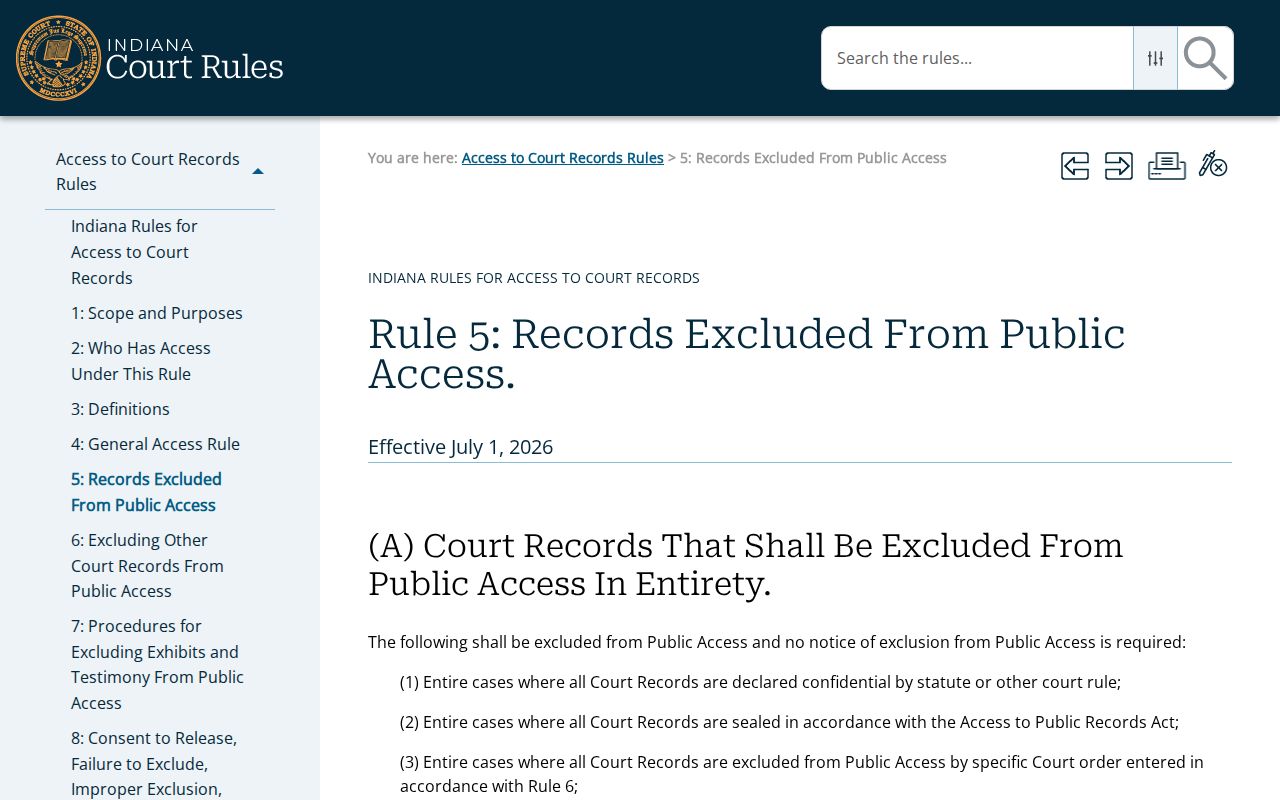
This Jennings County access page shows the court rule itself, with no mugshots, no wanted roster, and no private search results.
Arrest Warrants: What They Contain
A public Jennings County arrest warrant record can carry the facts that tie the paperwork to the right case. No live sample record is published here. A made-up local warrant number would mislead more than help. Start with the cause or case number printed on reliable paperwork. Compare it against the court's public record. Bond information, where it appears, is an order in that case. Confirm it is current.
| Named subject | The person identified with reasonable certainty, not a finding of guilt. |
|---|---|
| Offense | The alleged crime for which probable cause was found. |
| Issuing authority | The judge and Jennings court that authorized the arrest. |
| County and direction | Jennings County and the command to arrest and bring the person before a court. |
| Issue date and signature | When the warrant was signed and the judicial signature authenticating it. |
| Bond or return | Any stated terms and the service return, if those portions are public and current. |
The affidavit may hold more detail than the warrant's face, though it can be restricted before service. The official record stays with the Jennings County Clerk of the Circuit Court. A clerk can explain access and procedure. Legal advice is another matter. A clerk cannot predict what a judge will do.
Check Jennings County Arrest Warrants
Jennings County posts no official public active-warrant roster, and Indiana runs no public statewide criminal-warrant database. So a sound lookup uses several channels. Each one answers a different question about the case.
- Use Indiana MyCase with a known case, citation, or cross-reference number. A legal name and date of birth can narrow a party search.
- Call the responsible court. Circuit Court publishes 812-352-3082 and Superior Court publishes 812-352-3087. Official clerk listings differ between 812-352-3070 and 812-352-3073, so verify the current line.
- Follow the county probation instruction: visit the Jennings County Sheriff's Department with picture identification for an active-warrant inquiry. Call first to verify the place, hours, and safe reporting procedure.
- For a city-originated matter, call North Vernon Police at 812-346-1466 or non-emergency dispatch at 812-346-4911. The city has no verified warrant portal.
- For a document or policy, make a narrow Indiana Public Access Act request to the clerk or the sheriff office that maintains it.
A public-record request is not a private status check. Do not send sensitive identifiers to an unverified email or a general form. An official ISP page lists the Jennings County sheriff's address as 925 South State Street, though public contact data conflicts. Confirm the destination before you travel.
How Warrants Get Served in Jennings County
The court issues a Jennings County arrest warrant. Any of several agencies may then serve it: the Jennings County Sheriff's Department, North Vernon Police, Indiana State Police, or another department that crosses paths with the subject. Service can happen in a direct encounter. It can also happen at a traffic stop or another lawful contact. Systems like IDACS and NCIC support those agencies. They are not public self-search tools. After an arrest, the warrant return documents the service. The case then moves through booking, an initial hearing, bond decisions, and later court dates as they apply. The issuing court controls the order. Deputies execute it, and the clerk maintains the court file. Those distinct roles mean a MyCase event, a sheriff confirmation, and a judge's recall order are not interchangeable. Jennings County's jail listing moved to the statewide INJail custody portal in 2026. That resource shows custody information, but it cannot prove whether every arrest warrant is active or inactive. A person can have a warrant without being jailed, and a jailed person may be held for another reason.
Jennings Courts Divide Arrest Warrant Work
The Jennings Circuit Court and the Jennings Superior Court share the Jennings County Courthouse at 24 North Pike Street in Vernon. Circuit Court sits on the second floor. Superior Court sits on the first. Case records, filings, hearings, and court-authorized payments all happen there. It still cannot replace the sheriff's live service check on Jennings County warrants.
| Office | Likely role | Best question |
|---|---|---|
| Circuit Court | Felony and murder assignments | What filing, hearing, or order controls the case? |
| Superior Court | Misdemeanor, infraction, ordinance, and assigned cases | Has the court set a date or entered a later order? |
| County Clerk | Custodian of the court file | Which public documents and docket events are available? |
| County Sheriff | Service and current enforcement information | What is the verified active status and reporting route? |
Clerk staff cannot give legal advice. Anyone who cannot afford a lawyer in Jennings County can ask about the public-defender process at the first hearing or follow the written financial-status route the Circuit Court describes. The official Circuit Court page shows the court's jurisdiction and courthouse setting, which separates the judge who issues a warrant from the sheriff who serves it.
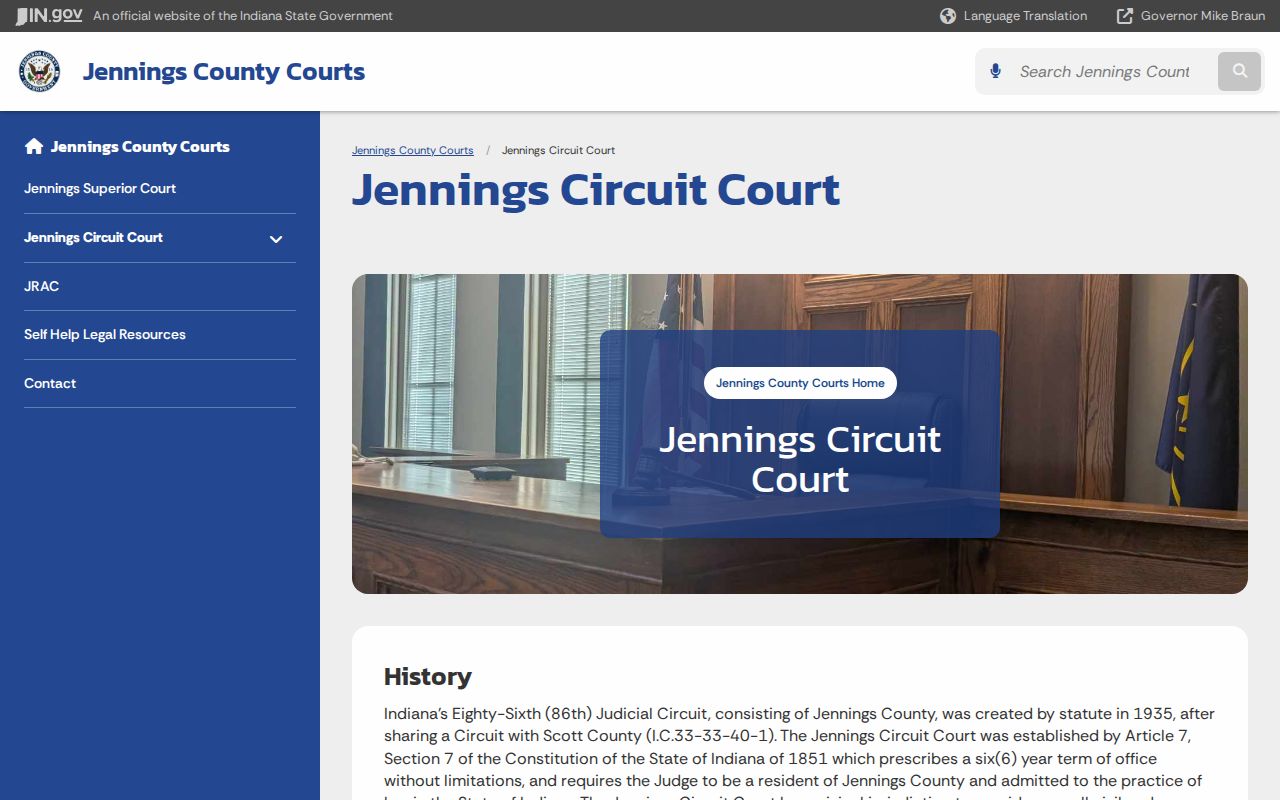
The Jennings County court that issues a warrant is not the sheriff office that carries out service.
Arrest Warrants, Summonses, and Bench Warrants
In Jennings County, each kind of process leads somewhere different. An arrest warrant rests on probable cause for an alleged offense. A summons tells a person to appear and skips the arrest. A bench warrant follows a missed hearing or a broken court requirement in a case already open.
| Feature | Arrest warrant | Summons | Bench warrant |
|---|---|---|---|
| Core command | Take the named person into custody | Appear on the stated date | Bring a noncompliant party before court |
| Typical basis | Probable cause for an offense | A case can begin without custody | Missed court or unmet obligation |
| First response | Confirm and plan with counsel | Attend and answer the case | Ask the issuing court about recall and hearing |
A search warrant is its own animal. It allows a search of a place, item, or data, not an arrest. Indiana also keeps investigative-request files in a restricted class of their own. So a Jennings County arrest docket search will not surface general police investigative material.
MyCase Is Not Jennings Warrant Clearance
Indiana's official MyCase search tips cover case, party, and attorney searches, plus filters, wildcards, and a sounds-like option. Enter the legal last name. Add a first or middle name if you know it. Use a date of birth only on the official service, since a case number is less likely to produce a same-name mix-up. Then read the event history for a warrant entry, a failure to appear, later hearings, a recall, or a service return. MyCase itself warns that it is not the official court record. Old matters and some documents may be missing. A "closed" label may not settle a separate probation, financial, or out-of-county issue, and a warrant event may have been served, recalled, or superseded after the public entry appeared. Confirm anything with the Jennings County clerk and sheriff before relying on it. Federal matters run on a separate track. Jennings County sits in the Southern District of Indiana's New Albany Division, and public federal dockets start at PACER. A county warrant search does not clear a federal warrant.
Handling an Arrest Warrant in Your Name
Take a suspected Jennings County arrest warrant seriously. Do not test its status through a chance police encounter. Before acting, gather the case number, any notice, identification, medication needs, a transportation plan, and a counsel contact. Ask the clerk which court controls the matter. Then ask the sheriff about current status and reporting instructions. A lawyer can handle a voluntary appearance, bond, and whether a motion to recall or quash is open to you. Recall means the judge withdraws the warrant. Quash means the court sets it aside.
Important: Speak with a lawyer before surrender. A verified active warrant can result in arrest, booking, bond review, and a court hearing.
Jennings County runs no amnesty week, fee-waiver period, online appointment system, or one-click warrant-clearing process. Paying money alone does not prove a judge recalled the warrant. Get a receipt for any authorized payment and written court confirmation of any later order. The Circuit Court says bond money is generally returned about two weeks after sentence or dismissal, less costs and fees. The Superior Court says release follows the end of the criminal matter. Neither statement is a current bond schedule or a promise for any one case.
Request Jennings Arrest Warrant Records
A narrow Jennings County request can seek the public part of a known court file, the sheriff's current warrant-inquiry policy, or de-identified counts. Under the Indiana Public Access Act, an agency must respond. A response is not instant production. State guidance generally calls for an answer within 24 hours to an in-person or phone request and within seven days to one sent by mail, email, or fax, and review with redaction can take longer. Name the agency, date range, and record category, and say whether you want inspection or copies. Ask for an advance fee estimate. If access is denied, request the legal basis plus the responsible official's name and title. The Indiana Public Access Counselor gives access guidance but cannot override a court sealing order. Skip requests for a bulk list with home addresses, birth dates, photos, juvenile identities, or other personal fields. Aggregate monthly issuance, service, and recall counts by case type measure system workload far better. No Jennings office publishes a warrant-count dashboard, and clerk and sheriff totals may sit in separate systems.